Building Skills, Confidence and New Livelihoods
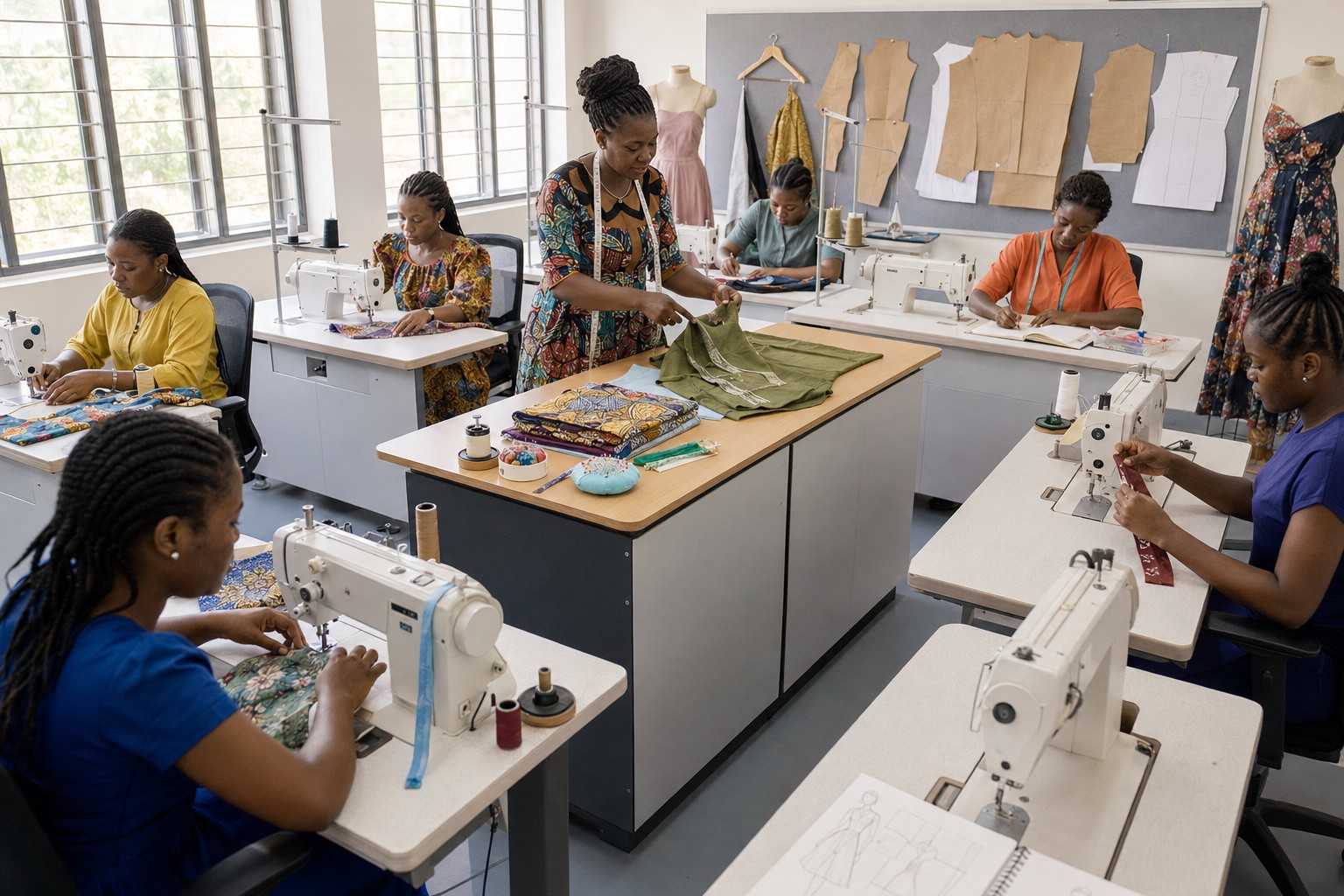
Community Pathway Africa supported 21 teenage mothers from Taviefe, in the Volta Region of Ghana, to complete six (6) months of practical training in dressmaking and fashion designing. The participants included widows, women with disabilities and survivors of sexual and gender-based violence.
Alongside their vocational training, the women learned financial management, entrepreneurship, pricing and basic business planning. Many also received start-up capital to establish small businesses and begin earning an independent income.
The programme has helped participants turn creative skills into livelihood opportunities, rebuild their confidence and take practical steps towards greater financial security. By removing barriers to training and enterprise, Community Pathway Africa is supporting women of different backgrounds and abilities to build safer, more self-reliant futures.
The Reality of Child Labour on the Volta Lake
The rescued children endured dangerous and physically demanding labour in the fishing industry on Ghana’s Volta Lake. Instead of attending school, they worked long hours in harsh and exploitative conditions. Their duties included diving underwater to free trapped fishing nets, pulling heavy nets, rowing canoes over long distances, and sorting, cleaning, carrying, and processing fish. They also repaired nets, prepared equipment, and loaded heavy fishing gear. Many worked from early morning until late evening with little rest or care. Denied adequate food, healthcare, education, and emotional support, they suffered exhaustion, trauma, and harm, losing their rights, dignity, safety, and childhood.
These hazardous activities placed children at constant risk of drowning, injury, exhaustion, infections, and psychological trauma.
Supporting Recovery and Reintegration
Following their rescue, each child received an individual needs assessment to identify the support required for their recovery and long-term wellbeing. CPA UK rehabilitation programme provided immediate protection through placement in temporary safe shelters, where the children received medical care, counselling, and trauma-informed psychosocial support from trained professionals.
Family tracing and assessments were carried out to ensure that reunification was safe and in the child’s best interests. Once appropriate safeguards were in place, the children were successfully reintegrated into their families and communities, with continued support for school re-enrolment and access to education.
This comprehensive approach helped the children recover from the physical and emotional effects of exploitation while giving them the opportunity to rebuild their lives in a safe and supportive environment. Working with the Child Protection Unit of the Ghana Police Service, investigations led to the arrest of three (3) fishermen and individuals involved in exploiting children within the fishing sector.
Project Sustainability
The success of this intervention demonstrates the importance of collaboration between civil society, government agencies, law enforcement, and local communities in protecting vulnerable children.
Today, some of the children who once spent their days risking their lives beneath the waters of the Volta Lake have returned to school, reunited with their families, and begun rebuilding their futures. Their recovery is a powerful reminder that with timely intervention, compassionate support, and strong partnerships, children can overcome exploitation and reclaim their right to safety, education, and hope.